When does a Macon lot need an alternative septic system?
When the ground cannot take a standard gravity field. Around Macon that usually means one of three things: a high seasonal water table on the Ocmulgee floodplain, shallow rock or steep slope on the Piedmont side, or a lot too small and tight for a conventional layout. An alternative design is how a lot that fails the standard test can still get a permit.
The state health department sets these rules, approves alternative systems, and lists them. The county reviews your specific design. Rule 511-3-1-.09 is the one that covers them.
The types of alternative system and what each solves
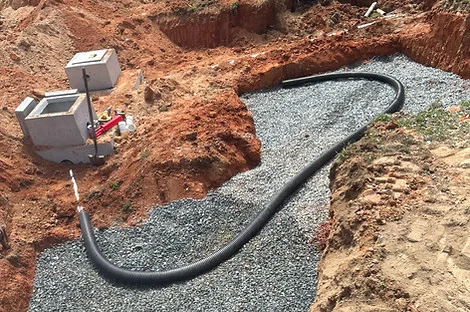
A built-up sand mound sits above the natural ground, which helps where the water table is high or the soil is shallow. It needs space and usually a pump.
A pump moves liquid uphill or distributes it evenly across a field. It solves grade problems and uneven absorption, and it needs an alarm.
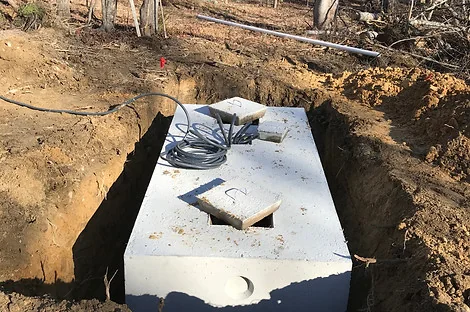
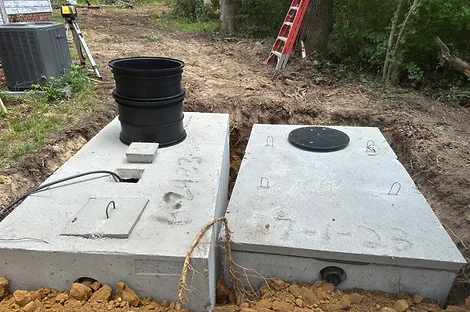
An aerobic unit treats wastewater before it reaches the field. Under Georgia's manual a Class I unit reduces the required separation to groundwater or bedrock to 1 foot. It uses electricity and needs a maintenance contract.
Small drip lines spread treated water over a wide, shallow area. It suits lots with limited usable depth, with design and upkeep to match.
Where alternative systems come up around Macon
- Ocmulgee floodplain. The state survey puts the water table within a few feet in flat, slowly draining ground. Aerobic pretreatment or a raised field answers the separation rule.
- Piedmont upland. Slope and rock limit trench depth; a pumped system can carry liquid to the best soil.
- Clay uplands south of the line. Slow absorption can be answered with a larger field, a different layout, or pressure distribution.
- Lake lots. Tight space calls for compact designs; see Lake Tobesofkee lots.
Fill is excluded under the manual unless special approval is granted, so building up a low lot with fill is not a shortcut.
How an alternative system gets approved
Soil evaluation
The classifier finds the limit: water, rock, slope, or slow soil.
Choose a design
We match the design to the limit and to what the health department will accept.
Permit
The Macon-Bibb County Health Department reviews it, (478) 749-0106.
Install and set up service
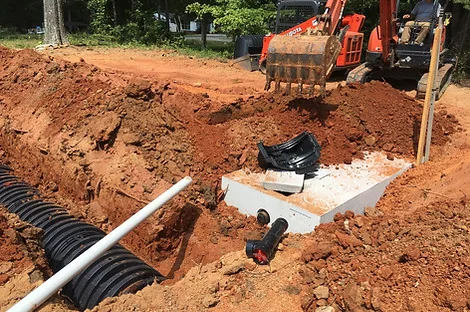
We install it, call for inspection, and set up the maintenance the system needs.
What it is like to own an alternative system
Under current rules the homeowner is responsible for maintenance, and the state health department says advanced treatment systems need closer care than a conventional one, with a maintenance contract and yearly monitoring recommended. Some alternative systems have pumps, alarms, or an aerobic unit that runs on electricity. A tripped breaker or a failed pump is a real problem, not an annoyance.
- Ask who services the system and how often, before you buy it.
- Learn what the alarm sounds like and who to call.
- Keep records. A future buyer or inspector will ask for them.
- Budget for the upkeep along with the installation.
A fair way to decide whether an alternative system is worth it
Compare three real numbers: the installed cost and upkeep of the alternative system, the cost of connecting to sewer if a main is reachable, and what the lot is worth if it can be built on. If sewer is reachable, septic or sewer is the place to start. If it is not, an alternative design may be the only way the lot is buildable, and the question becomes whether the lot's value justifies the system.
Do not let anyone talk you into an alternative system before the soil evaluation says you need one. The reverse also holds: do not give up on a lot because the first design did not fit.