What decides what a septic installation costs in Macon?
The soil result decides it. A lot that takes a standard trench field is a different job from one that needs a pump, a mound, or an aerobic unit, and the difference is more than the equipment: it changes the excavation, the materials, the permit review, and the upkeep after.
We are not going to print a price list here. Prices on lists like that are averages from places that are not your lot. We give a free itemized estimate for your address once we know what the ground does.
The factors that move the price
Absorption rate sets the field size. Clay needs more trench than sand. A water table within a few feet, which the state survey describes for flat floodplain ground, can force a different design.
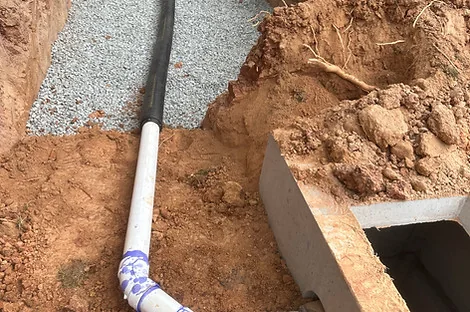
Gravity trench is the baseline. Pumps, aerobic units, and mounds each add equipment and service. See alternative systems.
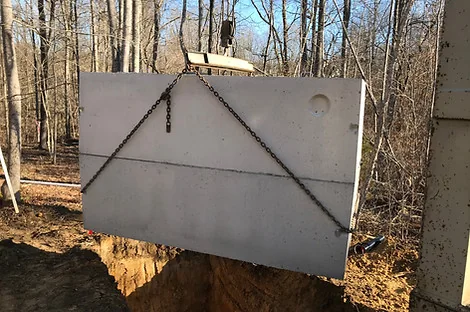
The tank and field are sized to bedroom count. Three- and four-bedroom homes typically use a 1,000 gallon tank, and homes with garbage disposals need at least 1,500, per the state.
Slope, trees, rock, and access for equipment change digging time and what machine can reach the field.
Soil evaluation, design, and health department review. These are real costs and they come first.
What an itemized estimate should list
- Soil evaluation and design, and who pays.
- Tank size and material.
- Field type and length.
- Excavation, hauling, and fill (and whether any is allowed).
- Pump, alarm, or aerobic unit, if used.
- Permits, inspection, and re-inspection.
- Grading, restoration, and what is not included.
Compare estimates line by line. A low total that leaves out the evaluation or the grading is not low.
When connecting to sewer changes the math
If a Macon Water Authority sewer main is on your street, the comparison is septic costs against connection costs, plus the monthly bill. Get the connection details from the water authority at (478) 464-5600 and our estimate side by side. See septic or sewer.
How to get a price you can trust
Send the address
With what you are planning and the bedroom count.
Get the soil evaluated
It sets the system type.
Receive the itemized estimate
Free, line by line.
Compare and decide
Against other quotes and against sewer.
Four ways a septic estimate misleads you
- It skips the evaluation. A number given before anyone has read the soil is a guess. The system type is not known until the evaluation is done.
- It assumes the wrong bedroom count. The tank and field follow the permit, and the permit follows the bedrooms. Add one and the job changes.
- It assumes a gravity field. If the lot turns out to need a pump, a mound, or aerobic pretreatment, a quote built on gravity will grow. Ask what the estimate assumes about the soil.
- It ignores what is under the surface. On the Piedmont side of the Fall Line, the state survey describes crystalline rock under weathered soil. Rock that shows up in the trench is slower and harder to dig. Ask how the estimate handles it.
None of these is a reason to distrust a number. They are reasons to ask what it assumes.
What a septic system costs after it is installed
The installation is the largest single bill, but not the last. The state health department recommends pumping every three to five years, depending on household use, and says a typical system is designed to last 20 or more years with proper use and maintenance. Advanced treatment systems need closer care, and the state recommends a maintenance contract with yearly monitoring for them.
Keep that in view when you compare systems. A design that costs less to install but needs a pump, a power connection, and a service contract may cost more over ten years than one that costs more up front and runs on gravity. Ask for the maintenance picture next to the installation number.
Where spending early saves money later
The evaluation and the permit are the cheapest place to find a problem. A lot that fails after the foundation is poured costs far more than one that fails on paper. If you are buying land, put the evaluation in your inspection period. If you are building, order it before the plans are final, since the result can move the house.