Does your Macon septic system need replacing or just repair?
Most septic trouble is one of three things: a tank that is physically damaged, a field that is no longer absorbing, or a pump or box that has failed. Only the first usually means a new tank. Finding out which one you have comes before any quote, because the three jobs are very different in size and cost.
The state health department puts typical design life at 20 or more years with good maintenance, and recommends pumping every three to five years. A system older than that, or one that has been skipped for a decade, is where we usually start looking at replacement.
New homes are a separate subject; see new home septic. This page is for existing homes in Macon and Bibb County.
Signs the system is failing
- Slow drains in every fixture at once, not just one sink.
- Sewage smell in the yard, usually strongest near the tank or field.
- Wet or spongy ground over the field, especially in dry weather.
- Backups into a tub or floor drain.
- Unusually green grass in a strip over the lines.
Any of these is a reason to stop adding water and call. Heavy laundry days and long showers make a struggling field worse.
A pumping alone does not fix a failed field. If the tank fills again within weeks, the field is the problem.
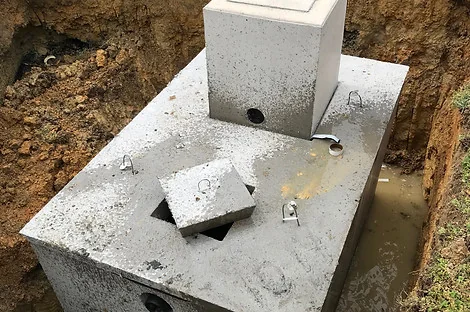
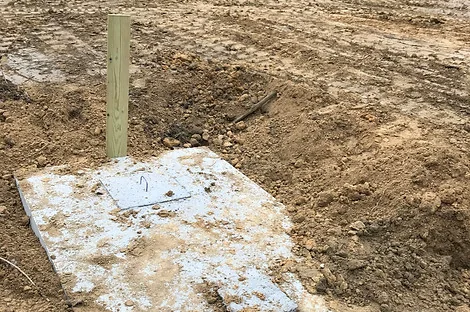
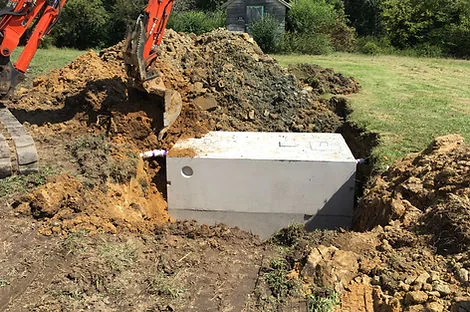
What actually gets replaced, and what usually does not
Concrete tanks crack and corrode over decades, and lids and risers fail first. If the tank wall or floor is compromised, it is replaced. If it is sound and only the baffle or lid is broken, repair is a fraction of the work.
A field fails when the soil around the trenches stops accepting water. Sometimes the field can be rested and repaired, and often the lines are replaced or the field is rebuilt in a different place. See drain field installation.
A distribution box that has shifted sends too much water to one trench. A pump in a pumped system can fail and back up the house. Both are small jobs compared with a new field, and both are easy to miss without a proper look.
Why Macon soils matter for a replacement
A replacement is a new design, not a copy of the old one, and the ground rules apply again. Georgia's septic manual wants at least 2 feet of soil between the trench bottom and seasonal high groundwater or bedrock, or 1 foot with Class I aerobic pretreatment. On Macon's floodplain ground, where the state survey puts the water table within a few feet in flat areas, a field that worked decades ago may not meet that today.
The Fall Line soil guide shows the five kinds of ground around Macon, and the alternative systems page covers what is used when a standard field will not pass.
How a replacement runs in Bibb County
Diagnose
We find out whether the tank, the field, or a part is failing. You get the diagnosis before the estimate.
Soil evaluation
A certified classifier evaluates the area for a new design. The old system's location is part of what they look at.
Health department permit
The Macon-Bibb County Health Department reviews the replacement. Call (478) 749-0106 for their current requirements.
Replace and inspect
We pump and properly abandon the old tank, set the new one, and call for inspection before cover.